
Table of Contents
- Organic vs Conventional Baby Lotion for Newborns: What New Parents Should Know
- Key Differences Between Organic and Conventional Baby Lotion
- Newborn Skincare Ingredients to Avoid
- How to Patch Test Baby Lotion Safely
- Baby Eczema Skincare Advice: Choosing the Right Moisturiser
- Making the Switch: Practical Tips for New Parents
- Conclusion: Finding the Right Baby Lotion for Your Newborn
- Frequently Asked Questions
Last Updated: October 3, 2026
Organic vs Conventional Baby Lotion for Newborns: What New Parents Should Know
Choosing between organic vs conventional baby lotion for newborns comes down to one question: how much do you know about what's actually in the bottle? This guide from Aurora Baby Co. walks through the real differences, the ingredients worth avoiding, and how to test any product safely before it touches your baby's skin.
Newborn skin is thinner and far more permeable than adult skin. That single fact shapes everything that follows. What you apply absorbs more readily, which is why the ingredients list matters more than the word "gentle" on the front of the tube.
Below, we break down certifications, patch testing, eczema care, and a practical checklist so you can decide with confidence rather than guesswork.
Key Differences Between Organic and Conventional Baby Lotion
Organic baby lotion is formulated with ingredients grown and processed under certified organic standards, which restrict synthetic pesticides and fertilisers. Conventional baby lotion may use the same base ingredients but without those restrictions, and often includes synthetic preservatives, fragrance, and emulsifiers.
The practical differences fall into three areas:
- Ingredient sourcing: Organic formulas typically use plant oils and extracts from certified supply chains.
- Preservation: Conventional lotions often rely on synthetic preservatives to extend shelf life.
- Fragrance: Organic products tend to use essential oils or no fragrance at all; conventional ones frequently use synthetic perfumes.
Neither category is automatically safer. A conventional product with a short, clear ingredient list can be gentler than an organic one loaded with essential oils, which can irritate newborn skin.
Certifications and Standards to Look For
Certification is where marketing claims meet verifiable standards. In the UK, the Soil Association certifies organic beauty and skincare products, requiring a minimum percentage of organic ingredients and strict limits on synthetic chemicals.
Look for these markers on the label:
- Soil Association COSMOS certification for organic content
- COSMOS Organic or COSMOS Natural logos, which set ingredient and processing rules
- Fragrance-free rather than "unscented," which can still contain masking perfumes
For broader guidance on cosmetic ingredient safety, the UK Cosmetic Products Enforcement Regulations set out what manufacturers must declare on labelling. If a product's claims don't match a recognised certification, treat the word "natural" as marketing rather than a standard.
Newborn Skincare Ingredients to Avoid
The ingredients worth avoiding in newborn skincare are those most likely to trigger irritation or allergic reaction. Fragrance tops the list, followed by certain preservatives and drying alcohols.
Watch for these on the label:
- Parfum or fragrance: a common cause of contact dermatitis in infants
- Methylisothiazolinone and methylchloroisothiazolinone: preservatives linked to skin sensitisation (pubmed.ncbi.nlm.nih.gov)
- Denatured alcohol: can dry and irritate delicate skin
- Essential oil blends: natural, but still potential irritants in high concentrations
- Sodium lauryl sulfate: a harsh surfactant better suited to adult products
Many parents assume "chemical-free" means safe and "natural" means gentle. Neither holds up. Some of the most irritating ingredients in baby products are plant-derived essential oils.
If your baby has known sensitivities, keep the ingredient list short. Fewer ingredients means fewer chances for a reaction.
How to Patch Test Baby Lotion Safely
A patch test checks whether a product will irritate your baby's skin before you apply it widely. It takes a small amount of lotion, a small area of skin, and a 24 to 48 hour wait.
Here is how to do it:
- Choose the spot. The inner forearm or behind the knee works well; both are sensitive but easy to watch.
- Apply a small amount. Use a pea-sized dot and rub it in gently.
- Wait and watch. Check the area at 24 hours, then again at 48 hours.
- Look for reactions. Redness, bumps, dryness, or unusual fussiness when you touch the area all count.
- Test the full application only after a clear result. If there's any reaction, stop and try a different product.
Baby Eczema Skincare Advice: Choosing the Right Moisturiser
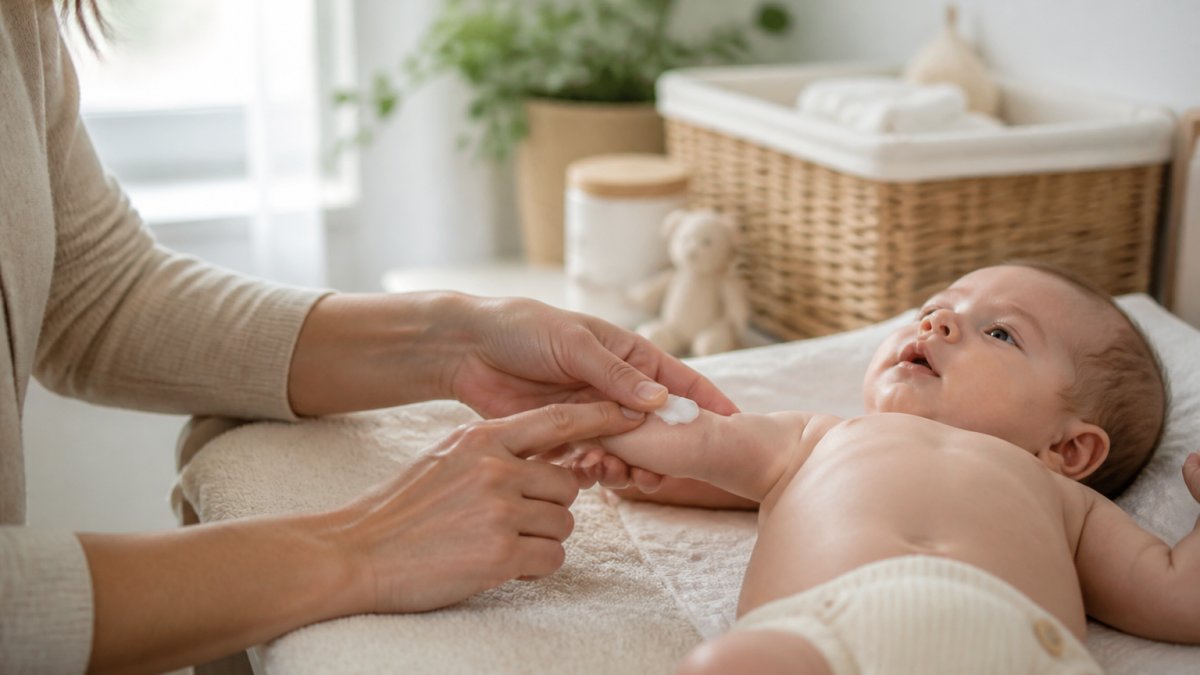
For babies with eczema, the right moisturiser is one that's fragrance-free, dye-free, and thick enough to hold moisture in. Emollients applied generously and often do more for eczema-prone skin than any single "miracle" product.
A few principles guide recommendations:
- Thicker is usually better. Ointments and creams seal in moisture more effectively than thin lotions.
- Apply within three minutes of a bath. This locks in hydration while the skin is still damp.
- Frequency beats strength. Several light applications a day outperform one heavy one.
- Avoid triggers. Fragrance, harsh soaps, and scratchy fabrics all make flare-ups worse.
If your baby's eczema is persistent, widespread, or seems infected, see your GP or health visitor. Skincare supports management; it doesn't replace medical advice.
Making the Switch: Practical Tips for New Parents
Switching products doesn't have to mean clearing the shelf. A staged approach lets you test what works without wasting money or upsetting your baby's routine.
Here's a suggested checklist:
- Introduce one new product at a time, never several at once
- Patch test every new item before full use
- Keep a simple note of what you used and when, so you can trace reactions
- Replace products as they run out rather than all at once
- Prioritise the products that sit on the skin longest, like moisturisers
- Keep a fragrance-free fallback on hand for flare-ups
| Product Type | Priority to Switch | Why |
|---|---|---|
| Daily moisturiser | High | Stays on the skin for hours |
| Bath products | Medium | Rinsed off, but frequent contact |
| Wipes | Medium | Used many times a day |
| Occasional balms | Low | Infrequent, small areas |
Conclusion: Finding the Right Baby Lotion for Your Newborn
The organic vs conventional baby lotion for newborns debate has no single winner. What matters is the ingredient list, the certification behind any claim, and how your baby's skin responds.
At Aurora Baby Co., we've built our range around soft, baby-friendly materials and thoughtfully designed essentials, so parents can choose with confidence. Explore our premium baby essentials, our comfort-first designs, and our timeless styles, then start shopping and find what suits your little one.
Frequently Asked Questions
Is organic baby lotion better for newborns?
Organic baby lotion isn't automatically better, but it can reduce exposure to certain synthetic pesticides and fertilisers used in conventional farming. For newborns with very sensitive or eczema-prone skin, an organic, fragrance-free formula may be gentler. However, what matters most is the full ingredient list, not just the organic label. Look for short ingredient lists, no added fragrance, and certifications from recognised bodies. Always patch test first, and speak to your health visitor or GP if your baby has persistent skin issues.
What ingredients should I avoid in newborn baby lotion?
Newborn skincare ingredients to avoid include synthetic fragrances (often listed as 'parfum'), alcohol (denatured alcohol or ethanol), parabens, phthalates, and essential oils like lavender or citrus, which can irritate delicate skin. Also steer clear of lotions containing harsh preservatives such as methylisothiazolinone. A good rule is: if you can't pronounce it and it isn't a natural emollient like shea butter or oat extract, be cautious. Fewer ingredients generally means fewer chances of a reaction.
Does the NHS recommend specific types of baby moisturiser?
The NHS does not endorse specific brands, but it advises using unperfumed, dermatologically tested moisturisers for babies, especially those with eczema. NHS guidance suggests applying emollients frequently, at least two to three times a day, and after bathing. For newborns, plain emollients like petrolatum or paraffin-based creams are often recommended because they are free from fragrances and colourings. Always check with your health visitor before trying a new product on broken or inflamed skin.
How can I tell if a baby lotion is truly organic?
Look for certification logos from recognised organic bodies such as COSMOS or Soil Association. These ensure the product meets strict farming and processing standards. Be wary of 'natural' claims without certification, as the term isn't regulated in the same way. Check the ingredient list for the percentage of organic content, and look for third-party testing. A truly organic lotion will usually have a short, plant-based ingredient list and no synthetic fragrance or dyes.
0 commentaire